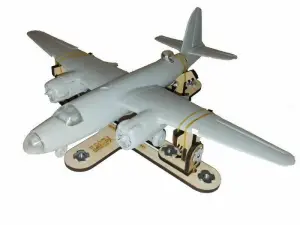
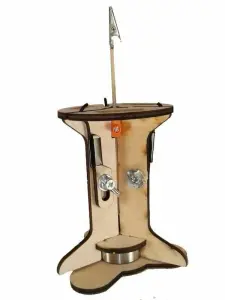
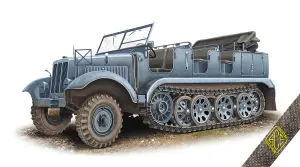
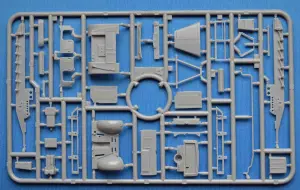
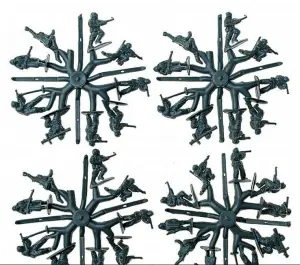
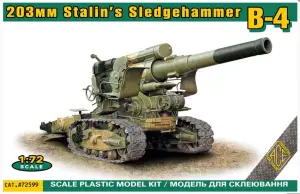
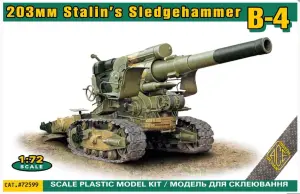
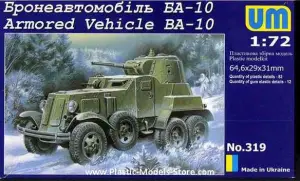
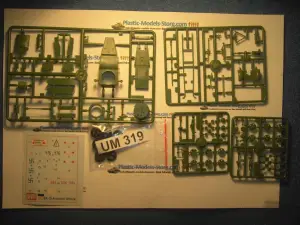
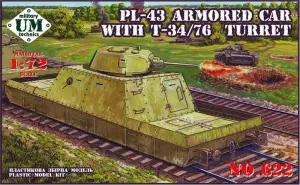
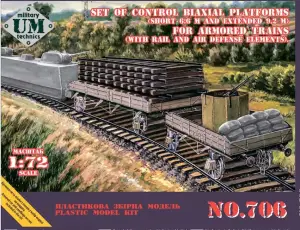
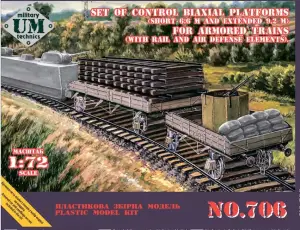
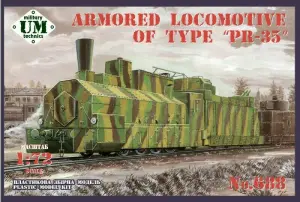
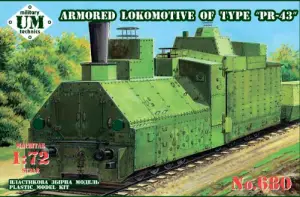
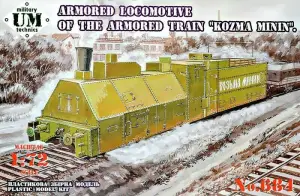
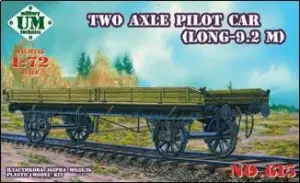
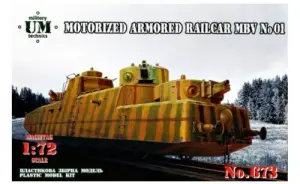
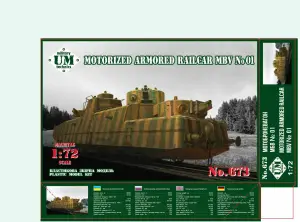
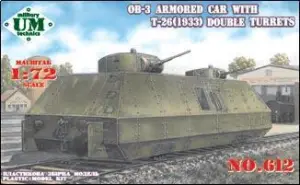
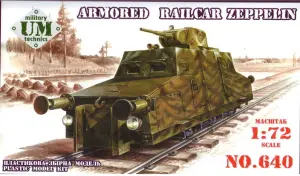
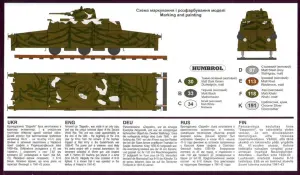
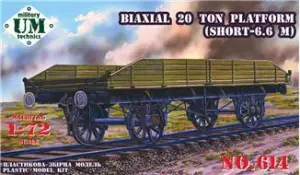
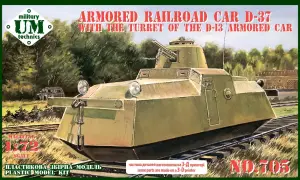
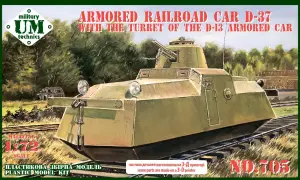
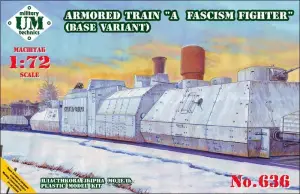
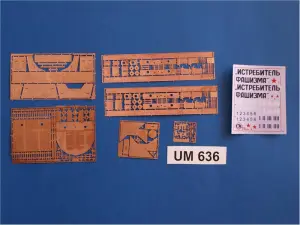
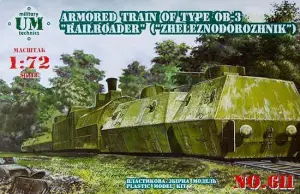
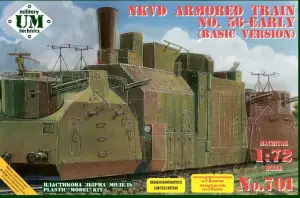
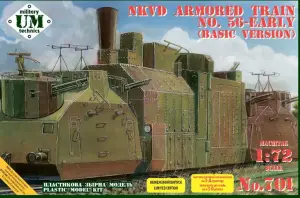
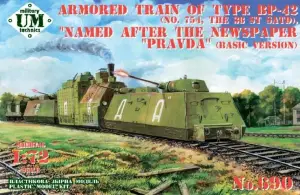
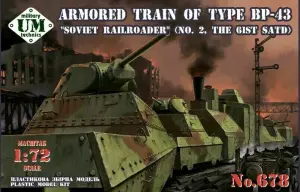
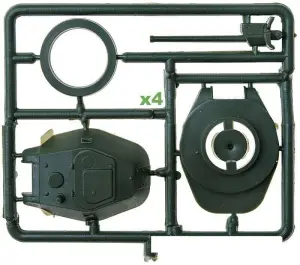
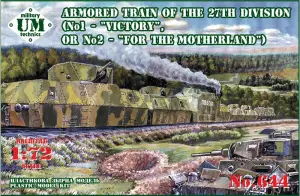
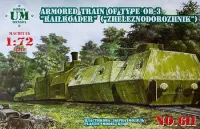
Armored train platform WWII
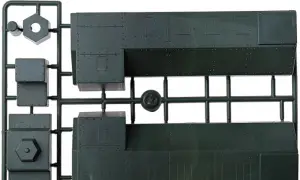
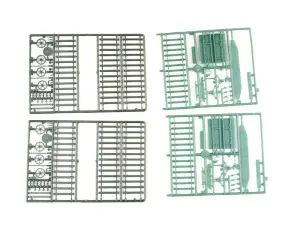
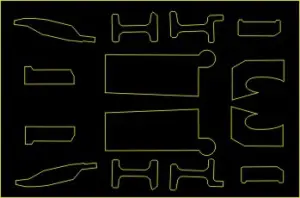
1/72 scale plastic model kit
UMmT 642
Polish forces made heavy use of armoured trains during the invasion of Poland. One observer remarked that "Poland had only few armoured trains, but their officers and soldiers were fighting well. Again and again they were emerging from a cover in thick forests, disturbing German lines". A less-discussed point about the many Polish armoured trains committed during the 1939 Polish Defensive War is that, when German aircraft struck the railways, the rails themselves were usually the target. As late as September 17, three fresh divisions in the east were transported westward by rail, and on September 18 three more followed.
This led Nazi Germany to bring armoured trains back into its own forces, which it used to a limited extent during World War II. Their designs were notably versatile and well equipped, including railcars carrying anti-aircraft gun turrets, cars built for loading and unloading tanks, and railcars with full armour protection and a large concealed gun/howitzer. Germany also employed fully armoured locomotives on such trains.
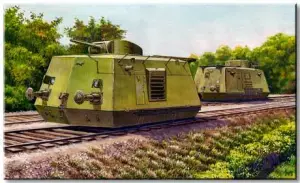
A Russian WW II-era armoured train with antiaircraft gunners
During the Slovak National Uprising, Slovak resistance fighters operated three armoured trains. The Hurban, Å tefánik and Masaryk, built at the Zvolen railway factory, survive today and can be viewed near Zvolen Castle.
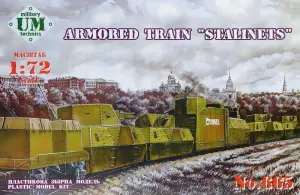
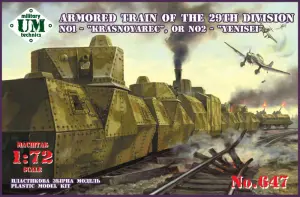
At the outset of World War II the Soviets fielded a large number of armoured trains, yet many were lost in 1941. Trains built later in the war were typically fitted with T-34 or KV series tank turrets. Others served as specialist anti-aircraft batteries, and a few were equipped as heavy artillery batteries, often using guns taken from ships.
Canada also (briefly) used an armoured train to patrol the Pacific coast and guard against a possible Japanese invasion
Armoured Russian locomotive class O Ov 5067 at the Central Armed Forces Museum, Moscow
Twelve armoured trains were formed in Britain in 1940 as part of preparations to meet a possible German invasion; they were initially armed with QF 6 pounder 6 cwt Hotchkiss guns and six Bren Guns. Royal Engineer crews operated them, and Royal Armoured Corps troops manned them. In late 1940 preparations began to transfer the trains to the Polish Army in the West, which operated them until 1942. They remained in service in Scotland under the Home Guard until the last one was withdrawn in November 1944. A 6-pounder wagon from one of these trains is preserved at the Tank Museum. A miniature armoured train ran on the 15-inch gauge Romney Hythe and Dymchurch Railway.
United States · Airmail with tracking · delivery ~14 days.
Change the country in the shipping box above.
| Box weight (products) | Price |
|---|
| 0.00 lb – 0.49 lb | $8.90 |
| 0.49 lb – 0.97 lb | $12.99 |
| 0.97 lb – 1.94 lb | $19.99 |
| 1.94 lb – 220.46 lb | $22.99 |
| Order over $150.00 | FREE |
This product weighs 0.52 lb.
There are no reviews for this product yet.
 −13%
4d 9h